
Featured Articles

Gainward GTX 780 3GB previewed

Gainward GTX 780 3GB previewed

The Gainward GTX 780 is now available priced at about US $649/€649, but we're hoping it will be available for a…

More...
GTX 780 available in US stores

GTX 780 available in US stores

The GTX 780, a trimmed down version of the Geforce Titan, is out and we wrote that almost a dozen…

More...
Newegg claims Shield comes on June 30

Newegg claims Shield comes on June 30

It is no secret that for the last few days you can pre-order Nvidia Shield, at least if you are based…

More...
Nvidia officially launches the GTX 780

Nvidia officially launches the GTX 780

Just as we wrote a couple of days ago, Nvidia has picked the 23rd of May as the official launch date…

More...
HIS iCooler Turbo HD 7790 reviewed

HIS iCooler Turbo HD 7790 reviewed

Today we’ll take a closer look at a factory overclocked HD 7790, courtesy of HIS. The HIS HD 7790 iCooler Turbo…

More...
Frontpage Slideshow | Copyright © 2006-2010 orks, a business unit of Nuevvo Webware Ltd.
Wednesday, 26 September 2007 15:25

Cooler Master Hyper 212

Written by Fudzilla staff
Image

Review: 120mm fan and quad heatpipes


Heatpipe coolers have become pretty common place by now and just about every cooler manufacturer has a selection of coolers with heatpipes these days. Cooler Master has just launched its latest model, the Hyper 212 and we’ve taken one out for a spin to see if it’s any good.
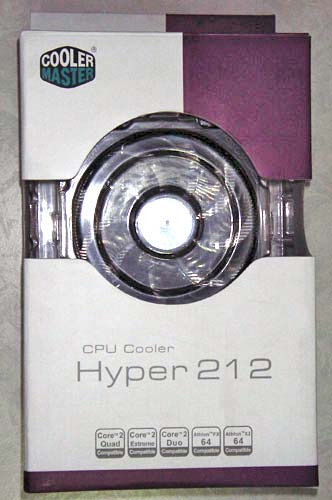
Image

First and foremost, this is a gigantic cooler, it measures 122 x 92 x 160 mm (WxDxH) which might even make it unsuitable for some smaller cases. It’s also quite heavy at 710g, so make sure you don’t throw your case around too much after you’ve fitted it. The Hyper 212 comes fitted with a single 25mm deep 120mm fan, but brackets are supplied for an optional second fan. The pre-fitted fan is black but features blue LED lights. The only downside here is that the fan uses a 3-pin rather than a 4-pin fan connector, as it means it can’t be controlled as well as some other fans.
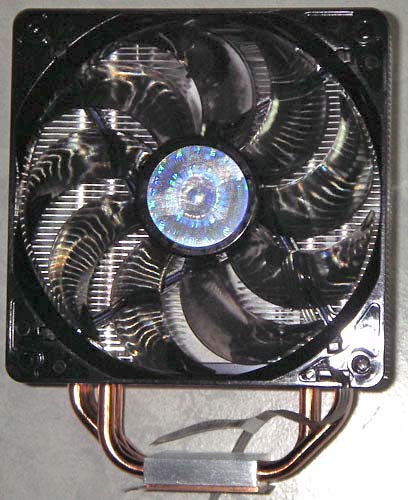
 
Image

It utilizes four heatpipes and has a copper base plate. The fins on the cooler are made from aluminum and are divided up into two separate sections. This should allow for improved airflow and circumvents most of the “dead zone” that you get from the center of the fan with traditional heatsinks.
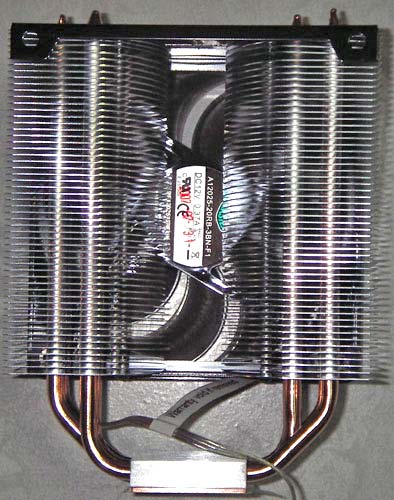
Image

  • «
  •  Start 
  •  Prev 
  •  1 
  •  2 
  •  3 
  •  Next 
  •  End 
  • »
(Page 1 of 3)
Last modified on Friday, 28 September 2007 12:48
blog comments powered by Disqus

To be able to post comments please log-in with Disqus


Facebook activity

Latest Commented Articles

Recent Comments