Published in
News
Bacteria used to build hard-drives

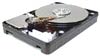
Even cheaper than Chinese factories
As labour costs in the Far East soar, it appears that researchers are working out ways to recruit bacteria to build hard-drives. Bio tech is being seen as a way to make hard-drives smaller and cheaper. According to the scientific journal Small a paper has suggested outsourcing the whole lot to bacteria. Not only do they work for nothing, but they also have smaller fingers.
A bacterium called Magnetospirillum Magneitcum, is usually found in oxygen-scarce shallow water and it navigates using the earth’s magnetic field. When the bugs eat iron, proteins in its body react with the metal to create nano-sized crystals of Magnetite. A team of researchers from Leeds, led by Sarah Staniland, have been extracting the protein, Mms6, from the bacteria in order to harness its capability for turning iron into magnetite.
The idea is that this could be used as an alternative to argon ions used in traditional hard drives and this will hold a much larger amount of information in a much smaller amount of space. Staniland wrote that humanity had been using and abusing nature because it’s had billions of years to do all of its experiments through evolution, so there is almost no point in her team starting from scratch. Fortunately she has no Americans on her team because they are not allowed to believe in evolution and think that that the world was created 6,000 years ago.
The team took a gold surface covered in chemicals in a chessboard pattern. One type of square binds proteins and the other repels them. They applied the protein to the surface and then coated it in an iron solution. Squares that bind the proteins then turn the iron into Magnetite while the squares that repel the protein don’t.
The smallest square they have made is 20 micrometers wide which would make a hard drive far larger than what you can buy now. But the big idea is to create a single iron particle per square with the potential to store as much as 1 terabyte of data per square inch.