Featured Articles

Intel plans Haswell refresh in Q2 2014

Intel plans Haswell refresh in Q2 2014

Intel has been executing its tick tock strategy flawlessly since January 2006 and now there is some indication that we might…

More...
Xbox One demoed running GTX card

Xbox One demoed running GTX card

It looks like the Xbox One just cannot catch a break. We have stumbled upon a report claiming that Xbox One…

More...
Haswell Pentium and Core specs surface

Haswell Pentium and Core specs surface

Haswell is out and now we have the complete specs for Intel’s first batch of fourth generation Core parts, as well…

More...
EVGA GTX 770 ACX 2GB previewed

EVGA GTX 770 ACX 2GB previewed

Nvidia is hoping that the Geforce GTX 770 will be a very popular product, and EVGA obviously share this view, as…

More...
Gainward GTX 770 Phantom reviewed

Gainward GTX 770 Phantom reviewed

Gainward has now officially unveiled its custom version of the Geforce GTX 770, the Gainward GTX 770 Phantom. Based on the…

More...
Frontpage Slideshow | Copyright © 2006-2010 orks, a business unit of Nuevvo Webware Ltd.
Tuesday, 04 September 2012 09:58

Club 3D HD 7970 GHz royalAce Edition reviewed

Written by Sanjin Rados

thumb

Review: Better cooling for GHz Edition and factory OC

Following the loss versus the GTX 680, AMD used its Radeon HD 7970 Gigaherz Edition to set some new performance records, but the speed increase brought about a noise increase as well. Club 3D is among the few AMD partners who took it upon themselves to fix what may be the HD 7970’s biggest downside – the overly loud fan. The new HD 7970 royalAce features Club 3D's CoolStream dual-slot cooler with two fans and three heatpipes that promises lower temperatures and lower noise when compared to the reference HD 7970 GHz Edition graphics card.

Based on AMD's HD 7970 GHz Edition, or Tahiti XT2 GPU with 2048 stream processors, the Club 3D HD 7970 royalAce has been set to work at 1050MHz for the base and 1100MHz for boost GPU clock with 3072MB of GDDR5 memory clocked at 6000MHz and paired up with a 384-bit memory interface.
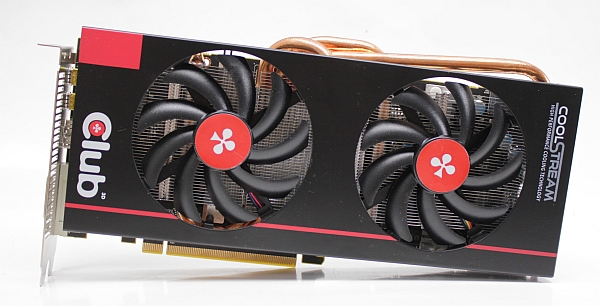
ace front

  • «
  •  Start 
  •  Prev 
  •  1 
  •  2 
  •  3 
  •  4 
  •  5 
  •  6 
  •  7 
  •  8 
  •  9 
  •  10 
  •  Next 
  •  End 
  • »
(Page 1 of 12)
Last modified on Tuesday, 04 September 2012 10:37
blog comments powered by Disqus

To be able to post comments please log-in with Disqus


Facebook activity

Latest Commented Articles

Recent Comments